
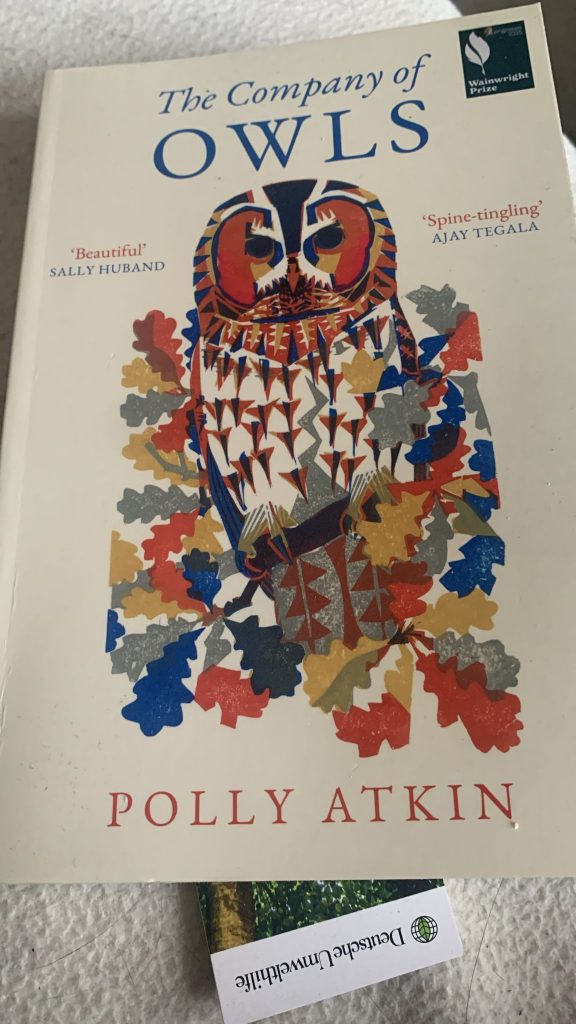
The Company of Owls – Reflections from Bad Herrenalb
The Company of Owls by Polly Atkin belongs to the classic tradition of the English nature memoir, where close observation of the natural world becomes a way of thinking about belonging, solitude, and care. Atkin writes as a poet, not as a prose stylist, and that distinction matters. Her sentences are lean, attentive, and precise — shaped by rhythm rather than argument. You feel that she listens before she writes.
Living here in Bad Herrenalb, we have a pair of eagle owls that nest somewhere behind the house. We rarely see them, but we always know they are there. Their calls carry through the valley at dusk, at dawn, and sometimes deep into the night — soft hoots that seem to shift in tone and distance. Anyone who listens to owls regularly learns that they have their own language, subtle and varied, with phrases that change according to season, hour, or emotion. Atkin captures this instinctively. She understands that sound, not sight, is often the truest form of presence.
Where I hesitate is in her closeness to the owlets. However well-intentioned, I think it is better to leave them alone — to observe without touching, to respect the distance that wildness requires. Interference, even out of affection, risks breaking the fragile boundary that allows both species to coexist.
Still, sometimes a single sentence can make a book worth reading. For me, that moment comes when Atkin writes:
“All owls are one owl when we hear them cry in the night. Like the moon, they bring us together even as we realise our aloneness under their gaze.”
That line captures what it means to live near owls — the quiet unity between watcher and watched, the shared solitude that links all living things under the same night sky. It also connects to our ongoing documentation of Uhu presence in Bad Herrenalb and to the wider reflection on biodiversity as shared narrative. Within the Data Room Methodik 2025, such reflections form part of a living archive — where observation, language, and presence converge.